About the Opiate Epidemic
Impacts of the opiate epidemic
Impacts of the Opiate Epidemic in Geauga County are far-reaching. In 2007, unintentional drug poisoning became the leading cause of injury death in Ohio, surpassing motor vehicle crashed for the first time on record. This tread has continued.

Opioid Deaths in Geauga County. Source: https://www.cdc.gov/nchs/nvss/vsrr/prov-county-drug-overdose.htm
Ohio Statistics
According to The Ohio Department of Health:
In 2018, 3,764 people died of unintentional drug overdoses. That’s a decrease of 1,090 compared to 2017, and the lowest number of deaths since 2015.
Fentanyl was involved in nearly 73% of all overdose deaths in 2018, often in combination with other drugs. That percentage was up from 71% in 2017, 58% in 2016, and nearly 38% in 2015.
In 2018, fentanyl was involved in nearly:
- 80% of all heroin-related overdose deaths
- 74% of all cocaine-related overdose deaths, and
- 67% of all psychostimulant/methamphetamine-related overdose deaths.
The number of overdose deaths involving natural and semi-synthetic opioids (e.g., oxycodone and hydrocodone) declined 42% from 2017 to 2018, but other synthetic opioids continue to rise.
National Opioid Deaths

Opioid Overdose Deaths Nationwide. Source: https://www.cdc.gov/drugoverdose/epidemic/index.html
The Opiate taskforce
The Opiate TaskForce was formed in 2012 as a committee of Geauga County leaders working to promote a “Drug-free Geauga” program, using county resources to remove unused prescription drugs from the community and keep unlawful drugs out.
The Positive Impact of Recovery Housing
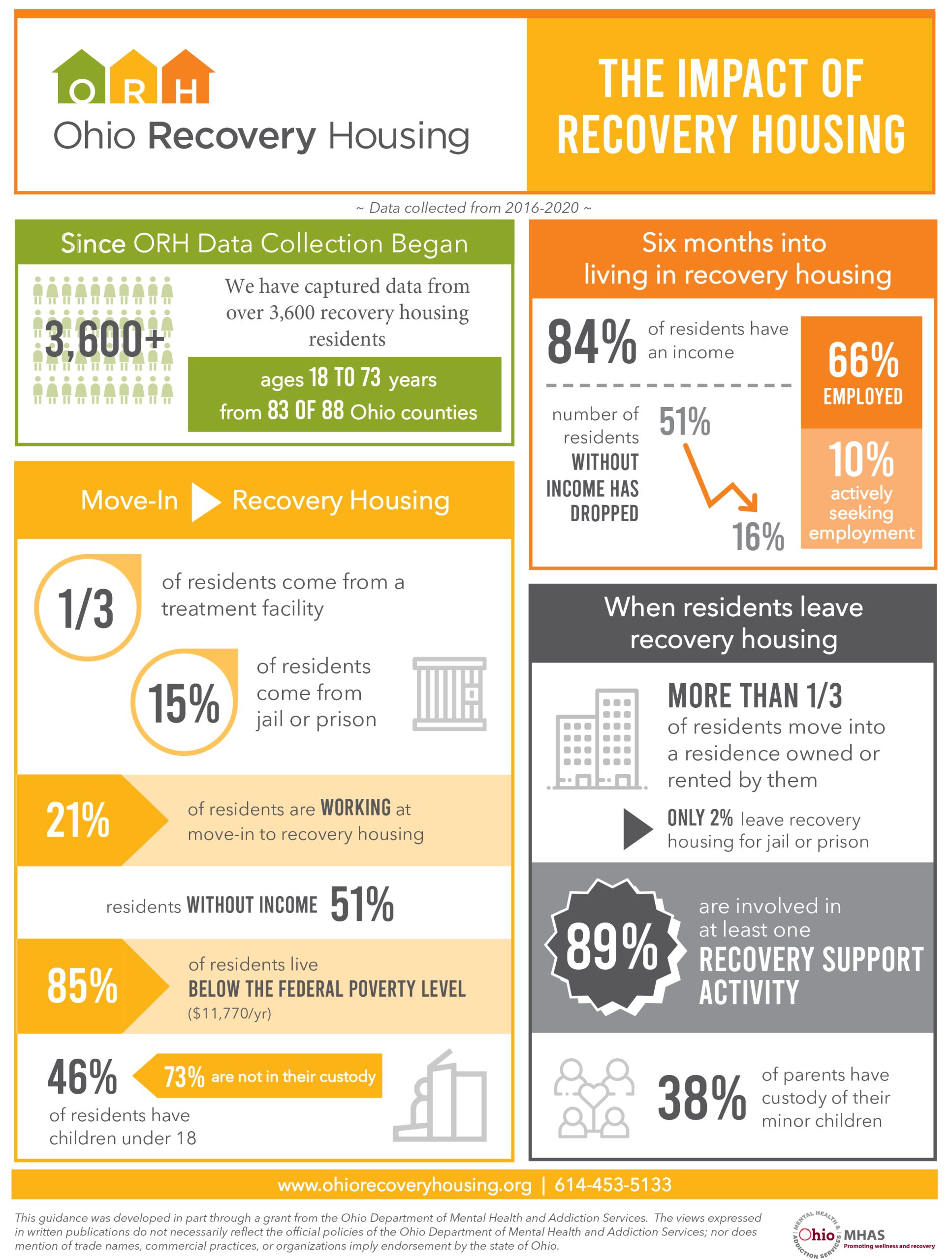
Information from Ohio Recovery Housing
Recovery housing is a critical component of the continuum of care for people with substance use disorders. A recovery home is not defined by the people who live in the home, but the environment that is created. A recovery home provides a safe, supportive living environment where individuals in recovery from a substance use disorder can receive peer support, connection to services, community support, and participate in resident driven recovery planning.
We know that recovery housing works. Ohio Recovery Housing has been collecting outcomes data on recovery housing from participating organizations since 2016. Looking at our most recent data collected, we found that:
-
-
Prior to recovery housing, most residents were living in substance use treatment centers, were incarcerated or were living in a residential facility or halfway house. When leaving recovery residences, residents were most likely to move back in with their family, move in with a friend, or into a residence that is being rented by them.
-
88% of residents who are moving out of recovery housing indicate that they are connected to ongoing recovery support services needed to maintain long-term recovery when they are leaving recovery housing, with nearly 75% connected to peer support services.
-
57% of residents had no income when they moved into recovery housing, this percentage drops to 23% for residents who have lived in recovery housing for six months
-
Only 5% of residents had an income of $25,000 per year when they moved into recovery housing. This increases to nearly one fifth (19%) after living in recovery housing for six months.
-
Over half of residents have over $5,000 in debt when they move into recovery housing, compared to 42% of residents at move out. While this may not seem like a small decrease, considering the relatively low incomes of residents of recovery housing, it is impressive how many are able to use living in an affordable recovery home as an opportunity to pay off debt and prepare for the future.
-
For residents who lived in recovery housing for six months, 17% of residents achieved a high school diploma or equivalent, 5% achieved technical or vocational certification.
-
These results indicate that recovery housing not only provides support for recovery, but also helps residents gain employment, increase their income, and build lasting recovery capital for their future.
Without this recovery support, people will be at risk of homelessness or returning to environments where they are surrounded by people, places and things that promote a life in active addiction instead of being surrounded by people, places and things that support a life in long-term recovery. The demand for this recovery support is high and funding is limited. According to a recent survey performed by ORH, 67% of recovery housing operators reported that they did not have sufficient capacity to serve everyone who had requested services in the past year.
Recovery housing is not an eligible benefit under Medicaid or private insurance – therefore, recovery housing operators rely on public and private grants, resident rent payments, fundraising and other efforts to ensure they have enough revenue to cover expenses and ensure that the housing is affordable for the people who need it.
—Excerpt from the ORH Newsletter, February 2025